<!DOCTYPE html>
How Kingman Dust Destroys Your Cooling System Efficiency
How Kingman Dust Destroys Your Cooling System Efficiency
Kingman sits on the high desert plateau along historic Route 66. Summer heat pushes well past 100°F. Wind drives fine caliche dust through neighborhoods from Butler to Valle Vista. That dust does not stay outside. It moves into outdoor condensers, indoor air handlers, and ductwork. Over one season, it strangles airflow and erodes efficiency. Over several seasons, it kills compressors and sends electric bills soaring. This is the day-to-day reality seen on service calls by Ambient Edge Heating, Air Conditioning & Refrigeration Inc. Across Kingman, AZ and wider Mohave County.
Understanding how dust behaves inside a cooling system is the difference between a comfortable home and an emergency shutdown. The details here draw on field measurements across 86401 and 86409, service records from homes near the Route 66 Museum and the Kingman Railroad Depot, and data from commercial rooftop units out by Kingman Airport. The takeaway is simple. Dust is not cosmetic. It is an engineering problem that robs capacity, spikes head pressure, and triggers breakdowns during peak heat. The fix is methodical and local to Kingman’s climate, not a generic checklist.
Why Kingman dust is an HVAC problem, not a housekeeping issue
Local soil and unpaved surfaces produce a fine, abrasive particulate. Wind events during monsoon season lift that dust into air intakes. Traffic along Route 66 and construction hotspots near Kingman Camelback add more load. Outdoor condensers and rooftop units in Golden Valley and the Cerbat area take the brunt of it due to full exposure. Even homes up Hualapai Mountain Road see heavy filter loading after a single windy week.
Unlike visible lint, this dust is small enough to embed in condenser fins and blower wheels. Once embedded, it changes surface heat transfer and adds drag to rotating parts. It also settles in drain pans, where it turns to sludge and blocks condensate lines. Over time, it works into electrical enclosures and pits contactor faces. The system begins to run hot, noisy, and unstable. Many emergency ac repair in Kingman, AZ calls tie back to this slow build of dust-related stress that finally tips the unit over on a 110°F afternoon.
Airflow physics 101: how dust chokes capacity
Airflow equals capacity in a vapor-compression system. A residential central air conditioner or heat pump needs design airflow across both coils. When dust loads the filter or blower wheel, supply CFM drops. Lower CFM reduces sensible capacity and changes coil temperatures. A light restriction is enough to trigger sweating ducts on a humid monsoon day. A heavier restriction will freeze the evaporator coil.
Typical field ranges show that a 10 percent airflow drop can cut delivered capacity by 5 to 8 percent. The compressor then runs longer to achieve setpoint. The evaporator runs colder. If the thermostat never satisfies, the unit short-cycles as the system hits safety limits. That short cycling drives up inrush current on each start and cooks start components. Ambient Edge techs replace failed capacitors by the dozen in July for this reason alone. Trucks in Kingman carry high-quality capacitors and blower motors for same-day restoration because these parts fail under dust-driven stress.
On the outdoor side, dust in the condenser fins blocks heat rejection. Head pressure rises. The compressor amps climb. The contactor runs hot. On a 105°F afternoon in 86401, a condensing unit with fouled fins can see head pressure spike 50 to 100 psi above normal. That cuts EER, bakes windings, and can end the compressor. The symptom to the homeowner is simple. The air feels weak and warm. The power bill jumps. The unit sounds louder than last year. The root cause is buried in the fins.
Common Kingman symptoms and the dust link
Service calls around the Route 66 district and out toward Dolan Springs show a repeating pattern. Each symptom ties to a mechanical reason. Dust is often the trigger or a multiplier.
AC blowing warm air often traces back to a fouled outdoor coil or low refrigerant charge. Fins blocked by dust force the system to run at high head pressure. That reduces net cooling. If refrigerant is low, the evaporator cannot pick up heat. In many Kingman cases both are present. A small leak in a flare fitting on a ductless mini-split plus a season of dust in the condenser creates a double hit to capacity.
Frozen evaporator coils usually point to low airflow or a metering problem. Dust on the return filter, a clogged MERV 13 in a unit that was engineered for MERV 8, or a blower wheel packed with fine dirt will starve the coil. Once ice forms, airflow collapses further and the system short-cycles. Melt water then overwhelms the drain pan. If the condensate line is already sludged with dust, it overflows and trips a float switch.
Short cycling is common in homes near Valle Vista during monsoon season. A dirty condenser raises head pressure. The compressor overheats. The internal overload opens. The unit rests, then tries again. That cycle repeats until a capacitor or contactor fails or the compressor gives up.
High electric bills across 86409 often start with a 20 to 30 percent reduction in airflow from filter and blower fouling. Add a 10-degree increase in condensing temperature from dirty fins and the system runs longer at worse efficiency. The bill tells the story before a full failure does.
Where the dust hides: components most at risk
Filters load first, but dust damage runs deeper. The blower wheel collects a layer that reduces vane volume. A blower off by a quarter inch of dust can lose significant CFM at the same speed. The coil face cements fine dust into the wet film, which hardens into a felt-like mat. Indoor evaporator coils in homes near the Mohave Museum of History and Arts often show this pattern after one heavy season without maintenance.
Outdoor condenser coils suffer a different problem. Dry dust packs into the fin core. It builds from the windward side and migrates through the coil. A garden hose rinse from the outside does little once the core is loaded. Proper cleaning pulls the fan shroud, splits the coil if needed, and flushes from the inside to the outside to push dirt out of the fin stack.
Electrical parts age faster in dusty environments. Contactors arc across pitted faces that hold grit. Start components cook as the compressor labors. Expansion valves stick as debris migrates after years without filter changes. Drain pans fill with sludge and grow biofilm. That sends a rotten smell through supply registers and triggers allergies in sensitive occupants.
Ductwork in older Butler homes often leaks at joints. Dust-laden attic air enters the return path and overloads the filter. The air handler then breathes attic dust full-time. That cycle repeats until the system is choked and the evaporator ices in the evening. Sealing return leaks is a potent fix in these houses because it cuts dust at the source.
Engineering trade-offs: filtration, static pressure, and blower performance
Many Kingman homeowners ask for the highest MERV filter. High capture is good, but static pressure is the constraint. A standard residential blower is sized for a total external static of roughly 0.5 inches water column. Put a dense MERV 13 in a one-inch slot and pressure spikes. Airflow falls. The coil runs cold. Comfort drops.
The better path is a right-sized media cabinet with deeper pleats and a larger surface area. A four-inch media filter can deliver higher MERV at a lower pressure drop. Pair that with duct repairs that cut return leaks. The result is cleaner air and stable CFM. Ambient Edge techs measure static pressure at the return and supply, then reference blower tables for the specific model. That converts pressure readings into true airflow. The number guides filter choices. Guesswork does not.
Heat pumps, common in Kingman, add another variable. In cooling mode, they share the same airflow needs as central AC. In heating mode, some systems accept lower airflow. A filter that is barely adequate in summer can starve the coil in July but pass in January. This is why seasonal checks matter in Mohave County. What worked in spring dust may fail at 108°F in August.
Refrigerant side effects: dust drives bad readings and worse outcomes
Technicians set charge by superheat and subcooling. Dust complicates both. A fouled outdoor coil raises head pressure. That inflates subcooling even if charge is fine. An iced evaporator from airflow loss lowers suction pressure and inflates superheat. The readings look like a charge problem. In truth, the system needs airflow and a deep coil clean. Incorrectly adding refrigerant chases a false number and can flood the condenser when airflow returns.
In Kingman service calls, the measured path is to restore airflow first. Clean the blower wheel. Clear the filter. Wash the evaporator and condenser coils the right way. Confirm condensate drainage. Only then set charge by manufacturer specs. Ambient Edge uses digital manifolds, calibrated scales, and OEM data for Carrier, Lennox, Trane, Goodman, Rheem, York, Bryant, Daikin, Mitsubishi Electric, and American Standard systems. The goal is to get the refrigerant circuit back to design conditions and stop the cycle of head pressure alarms and nuisance trips.
Rooftop units in industrial and retail zones: special dust hazards
Rooftop units across the Kingman Airport industrial area and along high-traffic corridors near the Desert Diamond Distillery face extreme dust load. Heat from the roof amplifies thermal stress. Fins bake the dust in place. Airflow recirculation across parapets pushes debris back into the coil face. Fan belts slip as grit builds on pulleys. Bearings dry out faster. A seasonal filter change is not enough for these RTUs. Quarterly coil cleaning and belt checks keep these packages from rolling over during July peaks.
Commercial refrigeration in restaurants near the Route 66 Museum also suffers from clogged condensers. Dust-laden kitchens and rear alleys block airflow to reach-in and walk-in condensing units. Warm product complaints often track back to a plugged condenser core and a failing fan motor. Ambient Edge’s commercial team restores these systems alongside cooling equipment to protect inventory and food safety.
Case notes from Kingman neighborhoods
A two-story home off Hualapai Mountain Road had two recurring issues. High summer bills and warm bedrooms. Static pressure at the return measured 0.7 inches water column with a one-inch MERV 11 filter. The blower wheel was packed with dust. After cleaning the wheel, installing a four-inch media cabinet, and sealing major return leaks, airflow rose from about 900 CFM to roughly 1,200 CFM on a three-ton system. Supply temperatures stabilized and the upstairs cooled in under an hour. The next bill dropped by about 20 percent during a comparable weather period.
A single-story in Valle Vista called for emergency ac repair in Kingman, AZ during a dust storm. The condenser ran but the indoor unit blew warm air. The outdoor coil was impacted with a crust of dirt. Head pressure measured high. The run capacitor tested below spec. The tech split the coil, flushed from the inside to outside, replaced the capacitor from stock on the truck, and reset charge after airflow stabilized. The system returned to design supply temperature drop in the same visit.
A small office near the Kingman Railroad Depot had a rooftop unit that short-cycled mid-afternoon. The condenser coil looked clean from a casual glance. After removing the top and pulling the fan, the core was packed tight two inches in. A coil comb and inside-out flush cleared the blockage. Belt tension and pulley alignment were corrected. Superheat and subcooling were set to factory values. The unit ran steady through the next week of 100°F highs.
Maintenance built for Mohave County dust, not a generic schedule
Local dust load and heat drive a different maintenance rhythm than mild markets. A single tune-up before summer helps, but it does not hold through monsoon and late-season wind. Homes near dirt roads in Golden Valley need more filter changes. Rooftop units near IGM need more coil cleanings. The right plan accounts for address, exposure, and system type. Ambient Edge’s VIP Maintenance Club does this for Kingman’s conditions, with seasonal checks that target known failure points in dusty environments.
For central air conditioners and heat pumps in 86401 and 86409, a strong baseline is two full system checks per year. Add mid-season filter service during monsoon. For ductless mini-splits, clean indoor coil screens and wash outdoor coils more often due to tight fin spacing. For package units and rooftop installations, schedule quarterly coil inspections and belt checks through July and August. Technicians log static pressure, temperature splits, compressor amps, and refrigerant measurements each visit. That data flags drift before it becomes a no-cool call.
Dust-triggered failures that justify 24/7 emergency service
Kingman’s heat moves HVAC from comfort to safety during peaks. Infants, elders, and medical conditions cannot wait. Dust aggravates the likelihood of a sudden shutdown when the grid and the weather are least forgiving. That is why Ambient Edge runs 24/7 emergency AC service across Kingman, AZ and Mohave County. Dispatch targets 86401 and 86409 neighborhoods first for fastest arrival, with rollouts to 86402 and neighboring towns like Bullhead City, Lake Havasu City, Chloride, Hackberry, Peach Springs, and Dolan Springs as calls surge.
Technicians arrive with capacitors, contactors, blower motors, universal fan blades, and common refrigerants to restore cooling the same night if the repair is feasible. If the compressor is at end of life or a major part is on order, temporary cooling strategies are discussed. Communication stays plain and direct so the owner can make decisions fast while the house cools down.
Filter decisions that work in Kingman homes
Filter choice sets the tone for dust control. Many homes near the historic Route 66 corridor benefit from a dedicated media cabinet with a four-inch MERV 11 or MERV 13 cartridge. That combination captures fine dust without crushing airflow. For households with allergies, an electronic air cleaner paired with sealed return ducts and regular coil cleaning delivers cleaner indoor air without starving the system.
Change intervals should follow dust events, not the calendar alone. After a week of strong winds, inspect and change filters as needed even if the last change was recent. A clogged filter turns a coil into a freezer overnight. That single swap can prevent a weekend emergency call.
Technical checkpoints Ambient Edge performs on dusty Kingman systems
Local diagnostics go beyond a basic rinse and a look at the thermostat. Trained eyes and instruments matter in Mohave County. NATE-certified and EPA 608 certified technicians test and confirm the numbers that correlate with Kingman dust challenges. They check static pressure end to end, measure return and supply temperatures, read compressor amps against nameplate, and verify subcooling and superheat to the manufacturer spec. They scan condenser cores with a light for embedded debris. They pull blower assemblies when vanes are packed. They clear condensate lines and sanitize pans. They inspect contactors and start components for pitting and bulge. They calibrate thermostats and check control boards for fault histories.
Each brand has nuances. Lennox high-efficiency coils need careful flushing to avoid fin damage. Trane spine fins load differently and need a distinct cleaning approach. Carrier and Bryant system boards log specific error codes tied to high pressure events. Goodman and Rheem package units on roofs run higher coil temperatures and need more frequent service in dust. Mitsubishi Electric and Daikin ductless systems require coil screen cleaning and attention to outdoor fin spacing. American Standard and York rooftop units often show belt wear that throws airflow off on hot days. Ambient Edge keeps OEM parts and follows factory methods to hold SEER2 ratings and protect warranties.
Homeowner actions during a dust event
There are a few actions that reduce the risk of a shutdown without touching refrigerant or high-voltage parts. The aim is to keep airflow stable and prevent freeze-ups while the storm passes. These suggestions come from field experience during Kingman monsoon surges.
- Set the thermostat to a steady temperature before the dust hits to avoid deep pull-downs on a clogged filter.
- Inspect the return filter and change it if it looks gray or matted. Keep spares sized for your system.
- Rinse the outdoor condenser from the inside out if the unit allows safe access. Do not bend fins.
- Watch for ice on the indoor coil panel or suction line. If you see ice, set the system to Fan Only to defrost and call for service.
- Check that the condensate drain is flowing. If water spills, shut cooling off and request urgent service.
If the system is short-cycling or blowing warm air after these steps, the risk of compressor damage rises with each restart. That is the line where an emergency service call makes sense, especially when outdoor temperatures hold above 100°F.
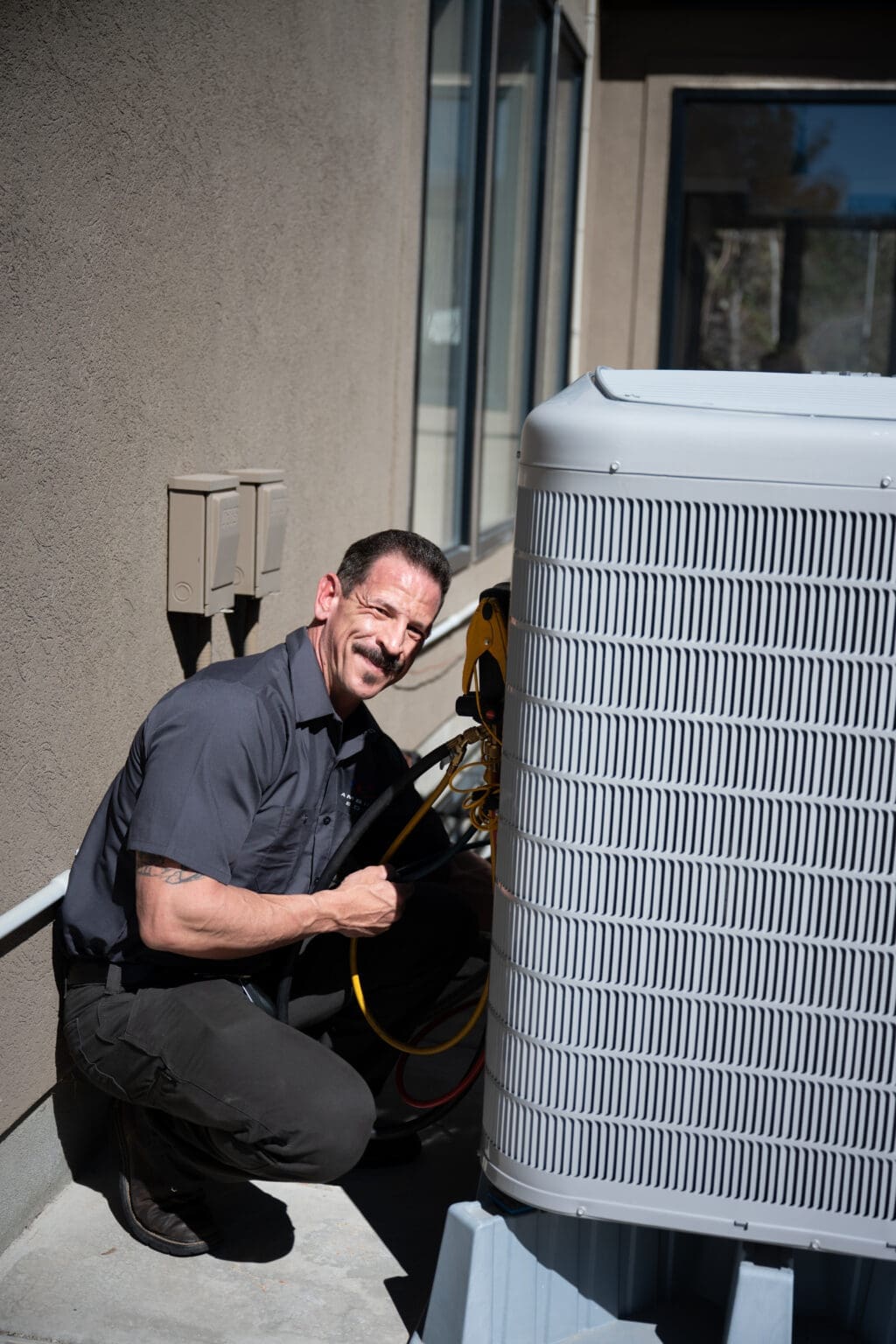
Why Kingman architecture changes dust behavior
Older block homes in Butler often have undersized returns and long duct runs through hot attics. These systems run near their pressure limit in clean conditions. Add dust, and they tip quickly into low airflow. Newer builds in Valle Vista may have tighter envelopes but still rely on single central returns that pull dust from high-traffic areas. Homes near Hualapai Mountain Park see cooler evenings that can mask a frozen coil until morning. Commercial buildings near Kingman Camelback rely on rooftop units that cook dust into fins due to radiant roof heat. Each building type demands a different maintenance cadence and airflow correction plan.
What “restoration” looks like on a dust-choked system
True restoration is not a spray-and-go wash. It starts with a baseline. Measure static pressure, temperature split, amperage, and refrigerant targets. Remove panels and access both coil faces. Pull the blower assembly. Clean the blower wheel until each vane edge is crisp. Clean the evaporator with the correct coil cleaner and a rinse that protects the drain pan. Split and flush the outdoor condenser coil from the inside out. Comb fins where needed. Replace the capacitor and contactor if they test out of spec. Confirm the condensate drain runs free. Seal return leaks with mastic and strap loose flex to reduce dust intake. Then set charge by the book. This process returns systems near the Route 66 Museum and across 86409 to factory behavior and keeps them stable under high heat.
When replacement beats repair in a dusty climate
There is a point where continued repair throws good money after bad. If the compressor has high hours, the condenser coil is corroded beyond a clean, and the blower motor or control board has repeat failures, a new system can drop energy use and remove emergency risk. Heat pumps with variable-speed blowers and higher SEER2 ratings handle static pressure better and maintain capacity at lower airflow. Ductless mini-splits from Mitsubishi Electric or Daikin can solve hot room problems in garage conversions or sunrooms that see direct dust infiltration. Rooftop unit replacements near commercial zones benefit from coated coils that resist dust adhesion and from improved filtration cabinets that hold deeper media.
Ambient Edge handles installs for Carrier, Lennox, Trane, Goodman, Rheem, York, Bryant, American Standard, Daikin, and Mitsubishi Electric. Load calculations and duct corrections are part of the job. The goal is less run time in the heat and fewer emergency calls during monsoon season. That outcome matters in Kingman more than a spec sheet alone.
Local proof points across Kingman and Mohave County
Teams see the same dust signatures in 86401 ranch homes near the Mohave Museum of History and Arts as they do in 86409 subdivisions north of I-40. Service trucks are out near the Route 66 Museum, by the Kingman Airport, down through Golden Valley, and up toward Chloride and Hackberry. Each call adds to a library of data on dust, airflow, and component failures. That is why the first step is often the same. Measure, clean from the core out, and bring the system back to design before touching charge. The consistency of this approach is why the fix holds through the next storm.
Emergency signals that mean “call now” in the Kingman heat
Dust-driven failures snowball fast above 100°F. Several scenarios demand immediate help to prevent major damage or health risks. A unit that runs but blows warm air while outdoor lines are hot signals a high head pressure condition. Repeated hard starts point to a failing capacitor or a compressor under stress. Ice on the suction line during the day shows airflow trouble that can kill the compressor. A tripped float switch with water in the pan means drainage is blocked and ceilings may be at risk. Burning smells or repeated breaker trips indicate electrical faults at the contactor or motor windings. Each of these is a red flag for emergency ac repair in Kingman, AZ.
Ambient Edge maintains a round-the-clock dispatch for such cases. Crews cover Kingman, AZ zip codes 86401, 86402, and 86409 first. Routes extend to Bullhead City and Lake Havasu City as needed. Calls from Peach Springs and Dolan Springs often involve rooftop units under dust strain. The protocol is clear. Stabilize the system, restore airflow, correct the fault, and verify through measured performance on site.
Two-minute system check any Kingman homeowner can do
Quick checks do not replace professional service, yet they prevent many breakdowns between visits. Keep them simple and safe.
- Look at the return filter. If light does not pass through, replace it now.
- Listen to the outdoor unit. Grinding or squealing hints at a failing fan motor or bearing.
- Feel the larger insulated line at the outdoor unit. It should be cool to cold during cooling mode, not warm.
- Watch the condensate drain outside or at the sink trap. A steady drip during cooling is normal. No flow can signal a clog.
- Check that supply air feels notably cooler than room air. A weak or lukewarm stream signals airflow or charge issues.
If any single check fails during a heat wave, call before the system shuts down fully. Early intervention costs less than a midnight compressor failure.
Why Kingman trusts Ambient Edge for dust-heavy systems
Ambient Edge Heating, Air Conditioning & Refrigeration Inc. Serves residential and commercial clients across Kingman, Arizona and Mohave County with a focus on dust-driven reliability. The team features NATE-certified technicians and EPA 608 certified specialists. The company is licensed, bonded, and insured in Arizona, ROC #245843. Trucks carry OEM parts and high-grade capacitors and blower motors for on-the-spot fixes. Service includes central air conditioners, heat pumps, ductless mini-splits, package units, rooftop units, and commercial refrigeration.
The shop stands behind work with a 100 percent satisfaction guarantee and flat-rate pricing. The VIP Maintenance Club delivers seasonal tune-ups aligned with Kingman’s dust cycle. Warranty repairs are available for major brands including Carrier, Lennox, Trane, Goodman, Rheem, York, Bryant, American Standard, Daikin, and Mitsubishi Electric. The method is steady. Measure first. Clean correctly. Repair with the right parts. Set charge to spec. Verify under load. That is how systems stay stable through July and August.
Service coverage with location depth
From homes off Hualapai Mountain Road to cul-de-sacs in Valle Vista, from older properties in Butler to rural spreads in Golden Valley, technicians arrive fast with the tools to deal with dust. The team works near landmarks like the Route 66 Museum, the Kingman Railroad Depot, the Mohave Museum of History and Arts, Hualapai Mountain Park, Kingman Airport, and Desert Diamond Distillery. Response routes are mapped for 86401, 86402, and 86409 and extend along Route 66 out to smaller communities like Chloride and Hackberry. That deep local coverage helps win Google Map Pack visibility because people see service vehicles in their neighborhoods day and night.
The bottom line for Kingman homeowners and businesses
Dust is the silent load that kills AC efficiency in Kingman, AZ. It clogs filters, packs blower wheels, blocks condenser fins, and gums drains. It drives high head pressure, low airflow, frozen coils, short cycling, and rising bills. It pushes systems into emergency service on the hottest days. The fix is local knowledge and measured work. Proper cleaning, airflow correction, coil restoration, and correct refrigerant charge return capacity and cut costs. Skipping these steps courts a compressor failure in the peak of summer.
Ambient Edge resolves dust problems every day for homes near the Route 66 corridor and businesses around Kingman Airport. The team sees the same patterns from Golden Valley to Cerbat and applies the same proven process. That is why calls for emergency ac repair in Kingman, AZ often end with a stable system the same night.
Ambient Edge Heating, Air Conditioning & Refrigeration Inc.
3270 Kino Ave,
Kingman,
AZ
86409,
United States
Phone: +1 928-615-8224
Website: www.ambientedge.com